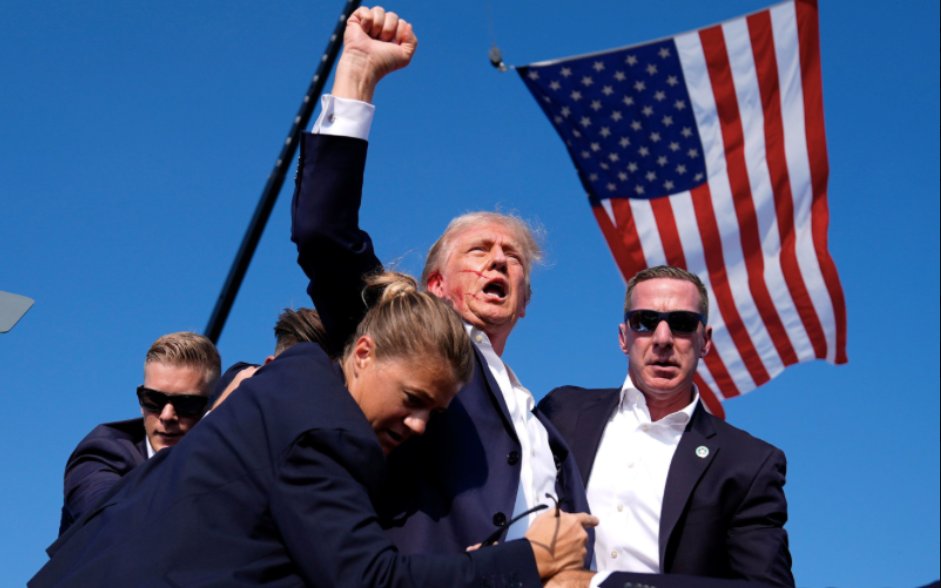
Failure: Radios Ignored, Google Maps to the Rescue While Trump Dodged Death
The stunning failures that nearly ended Donald Trump’s life at the Butler, Pennsylvania rally weren’t just incompetence—they were a masterclass in bureaucratic blindness. Local law enforcement made 102 radio calls about Thomas Crooks lurking and positioning himself to shoot, but the U.S. Secret Service heard none of them. When agents finally got word of the gunman on the roof just 155 yards away, a staffer resorted to Googling its location instead of asking locals. Shots rang out, a bullet grazed the president’s ear, and America came within inches of catastrophe.
A new Department of Homeland Security Inspector General’s report lays it out in brutal detail. The agency missed multiple chances to stop the assassination attempt cold. This wasn’t bad luck. It was systemic collapse under pressure, exposing how the protective detail charged with safeguarding the former president—and now sitting one—dropped the ball repeatedly.
The Radio Blackout That Changed History
Local cops were doing their jobs. They spotted Crooks acting suspiciously, climbing the American Glass Research building, and getting into firing position. One hundred and two radio transmissions warned of the threat. Secret Service personnel in the joint command setup? Deaf to all of it. No shared communications room meant critical intel never reached Trump’s detail.
Secret Service Missed 102 Warnings about Trump Assassin in Butlerhttps://t.co/sRlO5ag6Zw
— Civic Duty🇮🇹🇦🇺 (@CivicDuty465256) July 5, 2026
Instead, the agency received a measly five phone calls and three texts about Crooks. No urgent alerts to the stage team. At 6:09 p.m., a local call warned of the rooftop gunman. The Secret Service counter-drone operator started Googling the building’s location rather than demanding precise coordinates from partners on the ground. While that search dragged on, bullets flew. Crooks was neutralized by a law enforcement sniper, but not before killing one rallygoer and injuring two others.
Report: Secret Service agent Googled the location of #Trump’s would-be ASSASSIN while bullets were flying.
Here’s the Post:
A Secret Service counter #drone operator futilely searched the internet for the location of the rooftop President Trump’s would-be assassin was spotted…
— CO2=LIFE, White Lives Matter (@StevenS23337721) July 4, 2026
This wasn’t isolated. The report highlights broader breakdowns: no effective perimeter security outside the main area despite Pennsylvania State Police plans flagging it as vulnerable. Line-of-sight risks from the AGR complex were identified but not fixed—no barriers, no extra assets. Intelligence on long-distance threats never reached Pittsburgh Field Office leaders or site agents, leaving insufficient personnel for the event.
Drone Debacle and the Undertrained Operator
Crooks flew his own drone over the site hours earlier for surveillance. The Secret Service’s counter-drone system? Out of service, manned by one undertrained operator who skipped pre-event testing. It took hours to fix while Crooks completed his nine-minute flight undetected. The regime’s equipment malfunction and human error combined perfectly to blind the protectors.
The IG report pulls no punches: “The Secret Service missed multiple opportunities to detect, prevent, and disrupt Thomas Crooks’ attempted assassination.” Failures spanned detection, communication, resource allocation, and basic coordination with locals. Crooks appeared more competent with his drone than the agency tasked with stopping him.
🚨 NEW DHS INSPECTOR GENERAL REPORT RAISES SERIOUS QUESTIONS 🚨
The DHS Inspector General documented a cascade of security failures surrounding the attempted assassination of President Trump.
According to the report:
The Secret Service counter-drone system was unavailable… pic.twitter.com/c8q6lOKZu7
— A Gene Robinson (@AlGeneRobi96834) July 4, 2026
Broader Implications and Lingering Mysteries
This report joins others probing the July 13, 2024, attack. Crooks’ motive remains murky—no clear manifesto, just a mix of searching Trump, Biden, and explosive materials. The 20-year-old registered Republican with a history of odd behavior slipped through every crack. Questions linger about advanced knowledge, communication lapses, and whether political pressures influenced security decisions around high-profile Trump events.
The Secret Service concurred with recommendations and claims fixes are underway. But trust is shattered. Protecting a former—and future—president demands flawless execution, not excuses. The near-miss underscores vulnerabilities in a system strained by politics and bureaucracy. Strong leadership prioritizing results over optics is the only fix.
Americans dodged disaster by inches that day. The failures exposed demand relentless accountability, not more reports. Trump’s survival and return to the White House proved resilience against threats both foreign and domestic. Lessons learned must prevent repeats—secure perimeters, seamless local coordination, and zero tolerance for lapses when lives and the Republic hang in the balance. The deep state instincts that enabled this cannot define protection for America’s leaders.